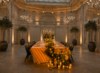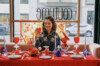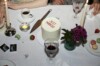
There is an intimate link between the way we dress and the way we set a table.
In both cases, it’s about balance, materials, proportions, and intention.
An outfit says something before we even speak.
A table does the same.

The silhouette comes first
When composing an outfit, we think first about the overall silhouette. The attitude. The presence.
A table works in much the same way.
Before choosing individual objects, there is a general impression. Is it structured or fluid? Minimal or theatrical? Soft or bold?
This invisible silhouette sets the tone.
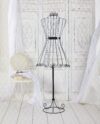
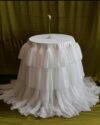
Statement pieces
In a wardrobe, certain pieces define a style. A coat, a pair of shoes, a piece of jewelry.
On a table, that role might be played by an antique plate, a sculptural centerpiece, or a daring textile.
These elements are rarely numerous, but they guide everything else.
As in fashion, excess is not necessary. One strong piece is often enough.
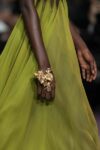
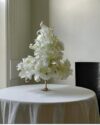
The essentials
A balanced outfit also relies on solid foundations.
Well-cut trousers. A simple shirt.
On a table, these essentials might be a neutral tablecloth, timeless glassware, soft lighting.
They create harmony. They allow the more expressive pieces to stand without overwhelming the whole.

The art of contrast
Fashion and the art of the table share a fundamental principle:
contrast creates depth.
Mixing old and contemporary.
Pairing matte with shine.
Layering textures.
It’s within these dialogues that style truly emerges.

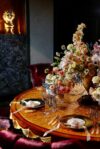
Intention as a signature
We don’t dress randomly.
We choose an outfit according to our mood, the context, the energy of the day.
The same is true for the table.
One evening it may be minimal. The next, bold and layered. It reflects a state of mind.
Dressing the table is ultimately an extension of personal style into space.

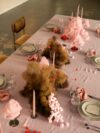
During Fashion Weeks, we speak of silhouettes, materials, signatures.
But creation does not belong to clothing alone.
It can unfold around a meal as well.
Perhaps setting a table is simply another way of getting dressed, not for oneself, but for those we welcome.