Luxury as a Sensation, Not a Demonstration
Luxury was once associated with what could be seen.
Abundance, visible wealth, the accumulation of external signs.
Today, something has shifted.
Luxury is no longer something that needs to be shown.
It is something that is felt.
A quiet evolution
In the most discerning circles, demonstration has lost its value.
Not because of a lack of means, but because of saturation.
When everything becomes accessible, what remains precious lies elsewhere.
In the experience. In the attention. In what is not immediately visible.
Luxury becomes quieter.

What is not immediately seen
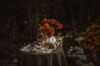
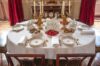
A truly refined table does not seek to impress.
It does not multiply effects or fill every space.
It allows room to breathe.
What matters lies in choices that are almost imperceptible.
The distance between objects.
The rhythm of heights.
A material chosen for its relevance rather than its shine.
These are the elements that create a sensation.


A matter of perception
Luxury today speaks less to the eye than to perception.
It is not meant to be understood instantly.
It unfolds.
It reveals itself over time, through the way light moves, how objects relate to one another, how the atmosphere soothes or intrigues.
It is an experience.


Restraint as a signature
What often defines the most refined tables is their ability to stop.
To not do too much.
This restraint is not a limitation.
It is mastery.
It allows each element to exist fully, without competition.
Luxury has not disappeared.
It has simply changed its language.
It is no longer measured by what is shown, but by what is felt.
And within the art of the table, this shift opens a more subtle, more demanding, yet infinitely richer territory.